

What Does Another Radical Biden Nominee Have to Do with Twitter’s Censoring Problem?
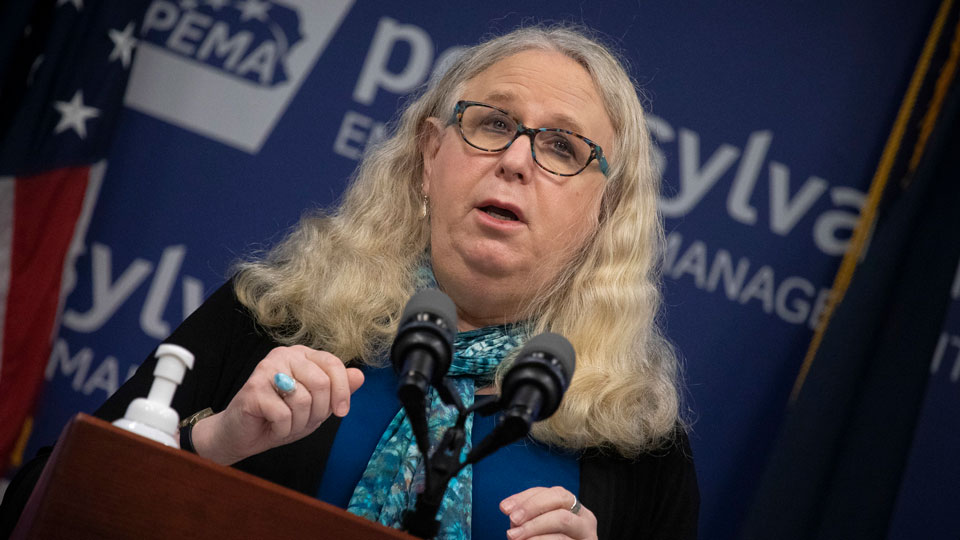
HHS Assistant Secretary Nominee Rachel Levine
Despite promises of “unity” in January, President Biden’s parade of nominees to serve in important cabinet positions demonstrates allegiance to a radical, one-sided agenda.
Just last week, on an almost entirely partisan vote, the Senate confirmed Biden’s pick for Secretary of Health and Human Services, Xavier Becerra. Mr. Becerra now leads HHS with no relevant medical experience. Instead, he comes to this important post with a resume reflecting a political career dedicated to extreme positions on abortion and opposing religious freedom – even for nuns and crisis pregnancy centers – throughout his time as a U.S. Representative and attorney general in California.
TODAY, the U.S. Senate will determine whether to confirm Biden’s pick for Xavier Becerra’s Assistant Secretary of Health, Dr. Rachel Levine.
Here’s where Big Tech Censorship comes in. In January, Twitter locked out Focus on the Family’s The Daily Citizen from their own Twitter account for correctly identifying Dr. Levine as a biological male who now identifies as a woman. Twitter claimed that stating this fact was “hateful conduct.” Big Tech must have decided to control any narrative around Dr. Levine because the censoring of Focus on the Family was not an isolated incident.
UPDATE: Despite appeals to Twitter, Focus on the Family is still locked out of their account.
Your support made it possible for Family Policy Alliance to jump into action. We launched a campaign on Twitter, challenging the tech giant – #AreWeNext to get banned simply for stating biological fact? Members of Congress and nearly 50 state and national organizations joined in the #AreWeNext campaign to defend our friends at Focus on the Family, including penning a letter to Twitter.
In fact, so many of you responded, that we’re only 4,000 away from 50,000 individual Americans signing our petition to Twitter that we’d like to deliver very soon!
If you have not yet signed our petition to Twitter to stop their censorship and free Focus on the Family’s account, please add your name here!
Since Focus on the Family was censored by Twitter for correctly identifying Dr. Rachel Levine’s biological sex, Dr. Levine has been through nomination hearings in the U.S. Senate. His answers to certain questions again revealed adherence to a radical political agenda – unfitting and deeply concerning for a national health policy leader.
Dr. Levine has openly advocated that even young children should be able to take experimental hormones to “transition” to the opposite sex—and that parents shouldn’t intervene. When Senator Rand Paul (KY) asked Dr. Levine whether children are indeed capable of making such life-altering decisions like “changing their sex,” Dr. Levine refused to answer the question.

In nearly every other area of law and life, minors are considered incapable of making adult decisions because their brains are not yet fully developed. This is why children can’t enter into contracts, why they are not typically treated as adults in criminal proceedings, and why parents have to sign permission forms for them to take a Tylenol at school.
A person considered for a top position in leading our nation’s health policy should be able to recognize that children are in need of protection, especially when it comes to their health. A person who believes that a 14-year-old has the mental capacity to assess the long-term consequences of a double-mastectomy on a healthy body is not fit for a top position in the Department of Health.
Tell your Senators to VOTE NO TODAY on Dr. Rachel Levine today!
Sending a message to your senators only takes one minute through our Action Center. Please tell them to vote no!
Thank you for taking action!

Autumn Leva
Vice President for Strategy
P.S. Twitter should not be censoring truth, and Dr. Levine’s radical agenda for children has no place in America’s health policy. We have to draw a firm line when it comes to truth, and when it comes to protecting our children. Please join us today: